Be yourself; Everyone else is already taken.
— Oscar Wilde.
This is the first post on my new blog. I’m just getting this new blog going, so stay tuned for more. Subscribe below to get notified when I post new updates.
Be yourself; Everyone else is already taken.
— Oscar Wilde.
This is the first post on my new blog. I’m just getting this new blog going, so stay tuned for more. Subscribe below to get notified when I post new updates.
Spring plunger also has a technical nomenclature SLD (spring-loaded device). It is a device that is narrow and small. It finds its application in areas where indexing and positioning of a component have to be done.
After installation, it tends to apply the required pressure so that the nose or ball (in its end) is remained accurately positioned. There are a variety of spring plungers available in the market. The common types are standard size and metric spring plungers.
Working of a spring plunger
As per the name suggests, spring plunger works by applying spring force. The spring force helps the ball at the rear end positioned the same at all times. In fact, no matter how much force is applied upon it, it remains intact in its position.
Therefore, the primary work area of spring plungers (whether they are standard or metric spring plungers is to lock the component in its place. Depending upon the pressure they exert, they come in three varieties like light, standard and heavy force producing plungers.
Design of a spring plunger
Spring plungers, whether metric or standard, all have the same design. There are three essential components, including a spring for internal compression, threaded body, and plunger.
The threaded body is the housing in which spring resides. On the tip of spring, resides the plunger, which manages the accurate force to be applied. This design is the simplest of all varieties of plungers that finds its use in manufacturing industries.
Benefits of using spring plungers
So, in case if you have been looking for good quality metric spring plungers with the above benefits, then Techni-Tool Products are the only name. They have relatively good quality plungers in all variety and sizes.
Installing a bare spring into any kind if tooling component could be quite a frustrating and irritating process. This happens due to the presence of several factors like compressing the spring for inserting it, forces that can damage the spring is utmost care and precautions are not administered and likewise. It is always a cause of concern that sprigs dislocates from the installer during the placement process and there are certain physics that are beyond the understanding of common technicians that makes the task tedious and very difficult. It is where spring plungers are the best solutions.
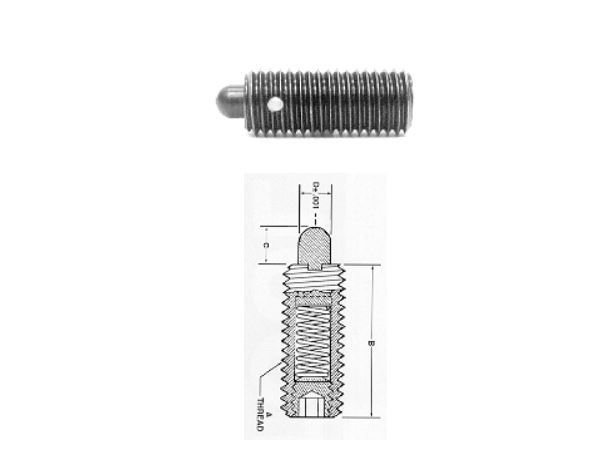
Working mechanism of spring plungers
The device protects the spring within a cylindrical body that helps it staying in place and sits in the desired position. The plunger from the tip to the tow end allows the spring to do its job effortlessly. Since the spring is firmly held back in its actual position, there is no fear of escaping it or being displaced. Also, during the installation process, the pressure and the forces of the tool are placed on the plunger body and not on the spring directly, thereby avoiding any chances of damage to the spring. The greatest advantage of using and installing spring plungers over bare springs are its safety and efficient operation benefits. Moreover, the end force in a spring plunger is more precise, as compared to the bare springs.
Techni-Tool Products Inc. products
Techni-Tool Products Inc. is a leading tool manufacturing company. Highest quality tools built with the perfect precision with aspects of safety, security, durability, and usability are the core of the company saving your valuable time and costly expenses. The spring plunger designed by the company is typically a specialized piece of hardware used in the desired places and offers 100% guaranteed results and satisfaction. For more product details, visit online athttps://www.techni-toolproducts.com/spring-plunger/
Source URL- http://bit.ly/2IQ0sOM
This is an example post, originally published as part of Blogging University. Enroll in one of our ten programs, and start your blog right.
You’re going to publish a post today. Don’t worry about how your blog looks. Don’t worry if you haven’t given it a name yet, or you’re feeling overwhelmed. Just click the “New Post” button, and tell us why you’re here.
Why do this?
The post can be short or long, a personal intro to your life or a bloggy mission statement, a manifesto for the future or a simple outline of your the types of things you hope to publish.
To help you get started, here are a few questions:
You’re not locked into any of this; one of the wonderful things about blogs is how they constantly evolve as we learn, grow, and interact with one another — but it’s good to know where and why you started, and articulating your goals may just give you a few other post ideas.
Can’t think how to get started? Just write the first thing that pops into your head. Anne Lamott, author of a book on writing we love, says that you need to give yourself permission to write a “crappy first draft”. Anne makes a great point — just start writing, and worry about editing it later.
When you’re ready to publish, give your post three to five tags that describe your blog’s focus — writing, photography, fiction, parenting, food, cars, movies, sports, whatever. These tags will help others who care about your topics find you in the Reader. Make sure one of the tags is “zerotohero,” so other new bloggers can find you, too.

 techni-toolproducts.com